
Blinds are one of the most practical and versatile window treatment options available. With a wide range of materials, styles, and configurations to choose from, finding the right blinds for your home requires understanding the key differences between options and matching them to the specific needs of each room.
Understanding the Types of Blinds
Wood Blinds
Wood blinds bring natural warmth and a classic aesthetic to any room. Their real wood slats have a rich texture and depth that faux alternatives cannot fully replicate. Wood blinds work particularly well in living rooms, dining rooms, and studies where a refined, traditional look is desired. They should be avoided in high-humidity areas like bathrooms and kitchens where moisture can cause warping.
Faux Wood Blinds
Faux wood blinds offer the look of real wood with greater resistance to moisture and humidity. They are an excellent choice for kitchens, bathrooms, and laundry rooms where real wood would be susceptible to damage. Faux wood options are also typically more affordable than real wood and come in a wide range of colors and finishes.
Aluminum Blinds
Aluminum blinds are lightweight, durable, and available in an extensive range of colors. They provide excellent light control through adjustable slats and are easy to clean. Their sleek, minimal appearance works well in contemporary and utilitarian spaces. They are also moisture-resistant, making them suitable for kitchens and bathrooms.
Vertical Blinds
Vertical blinds are designed for wide windows and sliding glass doors. Their vertical slats can be tilted to control light direction and privacy, and they stack neatly to one side when fully open. They are practical for large openings where horizontal blinds would be difficult to raise fully.
Key Considerations When Choosing Blinds
Light Control Needs
Consider how much light you need to control in each room. Bedrooms typically benefit from room-darkening or blackout-lined options, while living areas and kitchens may only need moderate light filtering. Adjustable slat blinds allow you to fine-tune light levels throughout the day by tilting the slats to different angles.
Moisture Exposure
Always match your blind material to the moisture conditions of the room. Real wood is not suitable for wet environments, while faux wood and aluminum handle moisture without issue. This distinction is particularly important for bathrooms and kitchens.
Window Size and Orientation
The size and orientation of your windows will influence which blind style works best. Wide windows may need center support brackets for horizontal blinds, while very tall windows might work better with motorized options for easy operation. South and west-facing windows with strong afternoon sun exposure benefit from tighter slat spacing or room-darkening fabrics.
Motorization
Motorized blinds are available across most product categories and add significant convenience, especially for large or hard-to-reach windows. They can be integrated with smart home systems for automated operation and remote control.
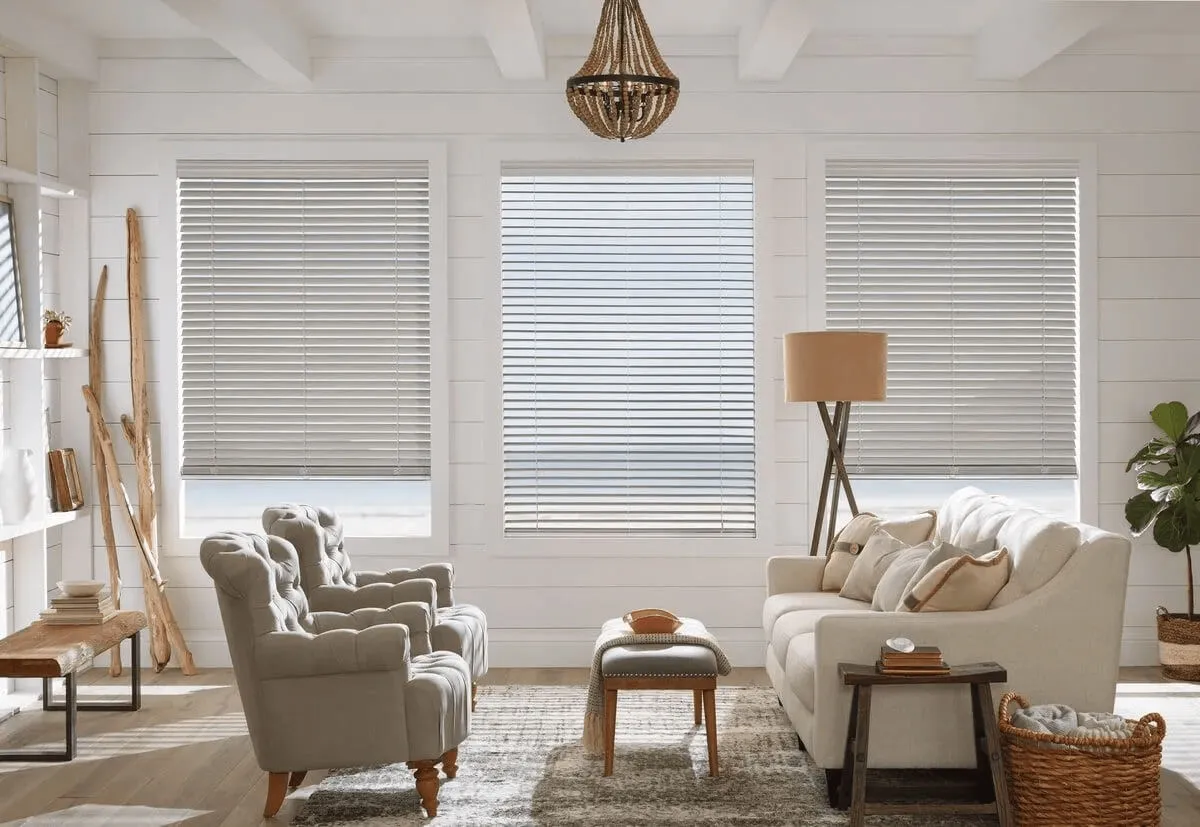
Find Your Perfect Blinds with Hartley Window Coverings
Choosing the right blinds is easier with expert guidance and the opportunity to see samples in your own home. Hartley Window Coverings offers a curated selection of blinds and personalized consultation services. Contact us today to schedule your free in-home consultation.


.webp)