Quick Answer
improve insulation by trapping air inside their honeycomb-shaped fabric pockets. This creates a barrier between your window glass and your indoor living space, helping reduce heat loss in cooler months and heat gain during warmer months. According to the U.S. Department of Energy, tightly installed cellular shades can reduce heat loss through windows by 40% or more during heating seasons, which can result in about 10% heating energy savings. In cooling seasons, cellular shades can reduce unwanted solar heat through windows by up to 60%.
Key Takeaways
- Cellular shades are one of the best window coverings for insulation because their honeycomb structure traps air and slows heat transfer.
- They can help reduce both winter heat loss and summer heat gain, especially when they are custom-measured and installed with a tight fit.
- For Santa Rosa homes, cellular shades are useful year-round because they help manage sunny afternoons, cooler evenings, glare, privacy, and indoor comfort.
Cellular shades are one of the most energy-efficient window treatment options for homeowners who want comfort without sacrificing style. Also known as honeycomb shades, cellular shades are comprised of small fabric cells that trap air between the window and the room. That trapped air helps slow heat transfer, which can make your home feel cooler during warm Santa Rosa afternoons and more comfortable during cooler winter mornings.
For homeowners in Santa Rosa, Sonoma County, Marin County, and Napa County, this matters because local weather can shift between warm, sunny days and cooler evenings. Santa Rosa has a warm-summer Mediterranean climate with warm, dry summers and cool, wet winters, and Sonoma County Tourism notes that the area averages 256 sunny days per year. That mix of sun exposure, seasonal cooling needs, and cooler nights makes window insulation an important part of home comfort.
Hartley Window Coverings offers custom cellular and honeycomb shades for homeowners looking to improve light control, privacy, insulation, and overall comfort. Hartley’s sitemap also includes a dedicated cellular and honeycomb shades service page under its interior shades section, making this a clear product focus for the company.
What Are Cellular Shades?
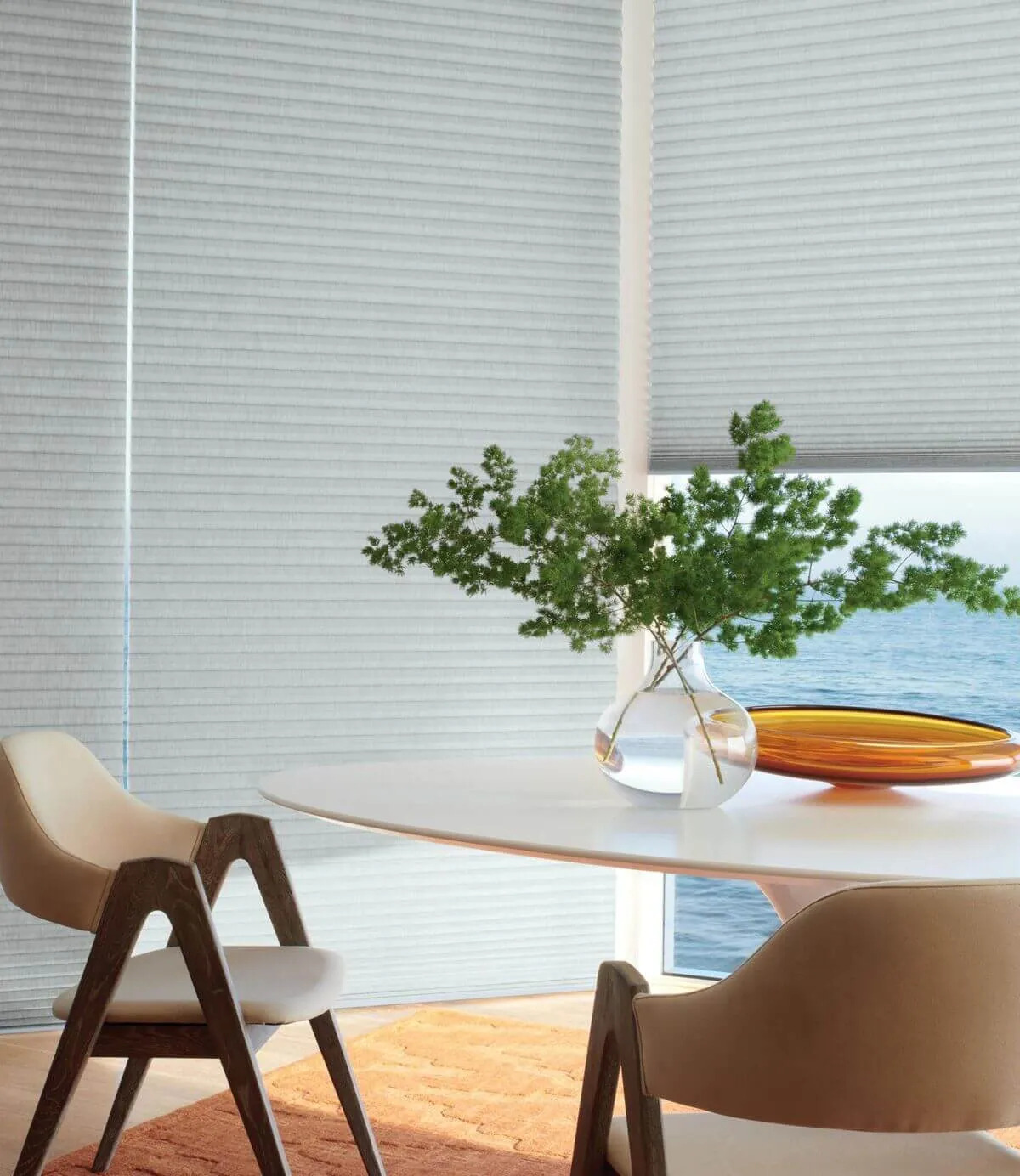
Cellular shades are fabric window shades made with a honeycomb-shaped structure. When viewed from the side, the shade looks like rows of small cells or pockets. These pockets hold air, creating an insulating layer between your window and the inside of your home.
This design is what separates cellular shades from basic roller shades, blinds, or standard fabric shades. Instead of simply covering the glass, cellular shades help create a buffer that slows the movement of heat. During colder weather, they help keep indoor warmth from escaping through the window. During warmer weather, they help reduce the amount of outdoor heat and solar energy entering the room.
Cellular shades are available in different pleat sizes, fabrics, colors, opacity levels, and operating systems. They can be light-filtering for soft natural light, room-darkening for bedrooms and media rooms, or blackout for spaces where stronger light control is needed.
Why Windows Are a Common Source of Energy Loss
Windows are one of the biggest weak points in a home’s thermal envelope. Even high-quality windows typically insulate less effectively than walls, ceilings, and attic insulation. When windows allow heat to move in or out of the home, your heating and cooling system has to work harder to maintain a comfortable indoor temperature.
The Pacific Northwest National Laboratory notes that window attachments can help reduce heating and cooling energy consumption, improve comfort, reduce glare, and improve a home’s resistance to extreme heat events. This is especially relevant in homes with large windows, west-facing rooms, older windows, sliding glass doors, or spaces that get strong afternoon sun.
In Santa Rosa and Sonoma County homes, window heat gain can be noticeable during sunny summer afternoons. In the winter, cooler nights can make windows feel drafty or cold to the touch. Cellular shades help address both issues by adding an insulating layer directly at the window.
How Cellular Shades Improve Insulation
The insulation benefits of cellular shades come from their honeycomb design. The small fabric cells trap air inside the shade, and air is a natural insulator when it is held in place. This trapped air helps slow conductive heat transfer through the window.
In simple terms, cellular shades help create a buffer zone. Instead of outdoor heat or indoor warmth passing directly through the glass, the air pockets inside the shade help slow that movement.
This can improve comfort in several ways:
- It can reduce cold spots near windows in the winter.
- It can help rooms feel less hot during sunny parts of the day.
- It can reduce drafts when shades are properly fitted.
- It can make rooms with large windows feel more balanced.
- It can help reduce how often your HVAC system needs to run.
Hunter Douglas describes its Duette® Honeycomb Shades as having an insulating cellular design that helps a home stay warmer when it is cold and cooler when it is hot. Hunter Douglas also notes that its Duette Architella® Honeycomb Shades are designed for even more energy efficiency.
How Cellular Shades Can Help Reduce Energy Costs
Cellular shades do not replace proper home insulation, energy-efficient windows, or HVAC maintenance, but they can help reduce the strain on your heating and cooling system. The less heat your home gains in summer or loses in winter, the less your HVAC system may need to work to maintain your preferred temperature.
The U.S. Department of Energy reports that tightly installed cellular shades can reduce heat loss through windows by 40% or more in heating seasons, which can translate to about 10% heating energy savings. In cooling seasons, cellular shades can reduce unwanted solar heat through windows by up to 60%.
Actual savings will depend on several factors, including:
- The number and size of windows in your home
- Window orientation
- The type and age of your windows
- The cellular shade fabric and opacity
- Whether the shade is single-cell or double-cell
- How tightly the shade fits inside the window frame
- How frequently the shades are opened and closed
- Your thermostat settings
- Your home’s insulation and HVAC efficiency
For example, a sunny west-facing living room with large windows may benefit more from cellular shades than a shaded north-facing room with smaller windows. A custom fit also matters because gaps around the shade can allow more air movement and reduce insulation performance.
Why Cellular Shades Work Well in Santa Rosa Homes
Santa Rosa’s climate makes cellular shades a practical year-round choice. Summers are warm and dry, while winters are cooler and wetter. Sonoma County also gets plenty of sunshine, which can create glare, fading, and heat buildup in rooms with exposed windows.
Cellular shades can help Santa Rosa homeowners manage these local conditions by:
- Reducing solar heat gain during warm afternoons
- Helping rooms stay more comfortable when temperatures drop at night
- Softening bright sunlight without making the room feel dark
- Improving privacy on street-facing windows
- Reducing glare in home offices, living rooms, and media rooms
- Helping protect furniture, flooring, rugs, and artwork from sun exposure
Homes in Santa Rosa, Sebastopol, Healdsburg, Rohnert Park, Petaluma, and nearby Sonoma County communities often have windows designed to bring in natural light and outdoor views. Cellular shades help homeowners keep those benefits while adding more control over comfort and energy use.
Cellular Shades vs. Other Window Treatments
Many window treatments can help with light control, privacy, or style, but cellular shades are especially strong when insulation is a priority.
Cellular Shades
Cellular shades are usually the strongest choice for insulation because of their air-trapping honeycomb design. They are a good fit for bedrooms, living rooms, nurseries, offices, dining rooms, and spaces where both comfort and clean design matter.
Roller Shades
Roller shades offer a sleek, minimal look and can be excellent for glare control and sun management. Solar roller shades are especially useful for preserving views while reducing brightness. However, they typically do not provide the same insulation benefits as cellular shades because they do not have the same air-pocket structure.
Roman Shades
Roman shades add softness and fabric detail to a room. They can provide privacy and light control, but their insulation depends heavily on fabric weight, lining, and fit. They are often chosen for decorative impact as much as for function.
Wood or Faux Wood Blinds
Blinds offer adjustable light control, but their slats leave more openings for air movement. They are helpful for privacy and directional light control, but they are generally not as effective as cellular shades for insulation.
Drapes and Side Panels
Drapes can add insulation when lined and properly installed, especially when they cover the full window area. They can also pair well with cellular shades for a layered look with improved comfort, privacy, and style.
Single-Cell vs. Double-Cell Cellular Shades
Cellular shades are available in single-cell and double-cell designs. Single-cell shades have one layer of honeycomb pockets. Double-cell shades have two layers of cells, which can provide additional insulation.
Single-cell cellular shades are often a good choice for moderate insulation, clean styling, and everyday light control. Double-cell cellular shades may be better for homeowners who want stronger energy performance, especially on larger windows, older windows, or rooms that feel noticeably hot or cold.
The right option depends on your goals. If you mainly want privacy and soft light, a single-cell shade may work well. If insulation and energy savings are the priority, a double-cell or higher-performance cellular shade may be worth considering.
Light-Filtering, Room-Darkening, and Blackout Options
Cellular shades are not one-size-fits-all. The fabric opacity affects how much light passes through the shade and how the room feels during the day.
Light-Filtering Cellular Shades
Light-filtering cellular shades soften natural sunlight while still allowing brightness into the room. They work well in living rooms, kitchens, dining rooms, and home offices where you want privacy without losing daylight.
Room-Darkening Cellular Shades
Room-darkening cellular shades block more light than light-filtering fabrics. They are a good fit for bedrooms, guest rooms, media rooms, and spaces where you want more control over brightness.
Blackout Cellular Shades
Blackout cellular shades are designed for maximum light control. They are ideal for nurseries, bedrooms, home theaters, and shift workers who need better daytime darkness.
Energy performance may also vary based on fabric, opacity, fit, and whether side gaps are minimized. A Hartley Window Coverings design consultant can help homeowners compare options based on each room’s needs.
Custom Fit Makes a Big Difference
The U.S. Department of Energy specifically refers to “tightly installed” cellular shades when discussing energy savings. That detail matters. Even a high-quality cellular shade can underperform if it is not measured or installed correctly.
A custom fit helps reduce gaps where air and sunlight can pass around the shade. This is especially important for insulation, privacy, glare control, and room-darkening performance.
Professional measurement and installation can help ensure:
- The shade fits the window opening properly
- Mounting depth is checked before product selection
- The shade operates smoothly
- Gaps are minimized where possible
- Large or specialty windows are handled correctly
- The final look matches the room’s design
Hartley Window Coverings helps homeowners choose the right cellular shades, measure accurately, and install the finished product properly.
Motorized Cellular Shades Can Improve Everyday Energy Control
Motorized cellular shades make energy-efficient window habits easier to maintain. Instead of manually adjusting every shade throughout the day, homeowners can use remote control, app control, voice control, or scheduled settings, depending on the product system.
Hunter Douglas notes that window treatments can improve energy efficiency through insulation, solar heat gain control, and daylighting. Motorization can support those benefits by making it easier to close shades during peak sun exposure, open them for natural daylight, or lower them during colder evenings.
For Santa Rosa homeowners, this can be especially helpful for:
- Hard-to-reach windows
- Large window walls
- Bedroom routines
- Sunny west-facing rooms
- Second-story windows
- Smart home systems
- Households that want consistent comfort without daily adjustments
A scheduled shade system can help your home respond to changing light throughout the day, even when you are not home.
Are Cellular Shades Worth It?
For many homeowners, cellular shades are worth considering because they combine insulation, privacy, light control, and a clean design. They are especially valuable when a room feels too hot in summer, too cold in winter, too bright during the afternoon, or uncomfortable near the windows.
The strongest case for cellular shades is not just lower energy costs. It is the combination of comfort and function. A better-insulated window can make the room feel more usable. A shaded sunny room can become easier to work in, relax in, or sleep in. A properly fitted cellular shade can improve privacy without making the space feel closed off.
For homes in Santa Rosa and Sonoma County, cellular shades are a practical choice because they address several common concerns at once: sun exposure, glare, privacy, seasonal comfort, and energy efficiency.
Schedule a Cellular Shade Consultation in Santa Rosa
If you are looking for a simple way to improve comfort and reduce energy loss at your windows, cellular shades in Santa Rosa, CA, and the rest of Sonoma County are a smart place to start. Hartley Window Coverings can help you compare cellular shade styles, fabrics, colors, pleat sizes, opacity levels, and operating systems for your home.
Our team provides custom window treatment guidance for homeowners in Santa Rosa, Sonoma County, Marin County, Napa County, and surrounding communities. Whether you want to make a sunny room more comfortable, improve privacy, or add energy-efficient window treatments throughout your home, we can help you find the right solution.
Contact Hartley Window Coverings today to schedule an in-home consultation and explore custom cellular shades for your home.
FAQs About Cellular Shades and Energy Efficiency
Do cellular shades really help insulate windows?
Yes. Cellular shades help insulate windows by trapping air inside their honeycomb-shaped pockets. This creates a barrier that slows heat transfer between the window and the room. The U.S. Department of Energy reports that tightly installed cellular shades can reduce heat loss through windows by 40% or more during heating seasons.
Can cellular shades lower energy bills?
Cellular shades can help lower energy use by reducing heat loss in winter and heat gain in summer. The exact savings depend on your windows, climate, shade fit, fabric type, and how often you use the shades. According to the U.S. Department of Energy, cellular shades can provide about 10% heating energy savings when properly installed.
Are cellular shades good for hot rooms?
Yes. Cellular shades can help reduce unwanted solar heat gain, which is useful for rooms that get strong afternoon sun. The U.S. Department of Energy states that cellular shades can reduce unwanted solar heat through windows by up to 60% during cooling seasons.
Are cellular shades better than blinds for insulation?
In most cases, cellular shades are better than standard blinds for insulation. Blinds can help with privacy and light control, but the gaps between slats allow more air movement. Cellular shades use honeycomb-shaped air pockets to create a stronger insulating barrier.
Should cellular shades be inside mount or outside mount?
Both can work, but the best choice depends on your window frame, depth, design goals, and light-control needs. Inside mount cellular shades offer a clean built-in look, while outside mount shades can provide more coverage around the window. For energy performance, minimizing gaps is the most important factor.
What rooms are best for cellular shades?
Cellular shades work well in bedrooms, living rooms, home offices, dining rooms, nurseries, media rooms, and rooms with large windows. They are especially useful in spaces where you want better insulation, privacy, and light control.
Can cellular shades be motorized?
Yes. Many cellular shades can be motorized for easier control. Motorized cellular shades are helpful for large windows, hard-to-reach windows, smart homes, and rooms where you want shades to open or close on a schedule.
Are cellular shades good for Santa Rosa homes?
Yes. Cellular shades are a strong choice for Santa Rosa homes because they help manage warm sunny days, cooler evenings, glare, privacy, and seasonal comfort. Santa Rosa’s warm, dry summers and cool, wet winters make year-round window insulation especially useful.


.webp)