Quick Answer
Exterior solar screens improve daytime privacy by using a woven mesh fabric that makes it harder to see from the brighter outside into the darker interior of your home. During the day, homeowners can usually still see out, while people outside have a reduced view in. Because the screens are installed outside, they also help block sunlight before it heats the glass, which can reduce glare, solar heat gain, and UV exposure. The level of privacy and visibility depends on the screen fabric, openness factor, color, lighting conditions, and distance from the window.
Key Takeaways
- Exterior solar screens are designed to improve daytime privacy, reduce glare, and preserve outward visibility.
- Because they are mounted outside, they help stop sunlight before it reaches the window glass, which can improve comfort in sunny rooms.
- Exterior solar screens are best for daytime privacy. At night, when lights are on inside, visibility can change, so rooms that need nighttime privacy may need an additional interior window treatment.
Exterior solar screens are a practical solution for homeowners who want more daytime privacy without giving up natural light or outdoor views. For homes in Santa Rosa and throughout Sonoma County, exterior solar screens can help manage strong sunlight, reduce glare, limit heat gain, and make outdoor-facing rooms feel more private during the day.
Unlike traditional shades that sit inside the home, exterior solar screens are installed outside the window or outdoor opening. This allows them to filter sunlight before it reaches the glass, which can improve comfort more effectively than many interior-only solutions. The U.S. Department of Energy notes that solar screens can reduce solar heat gain, UV damage, and glare while still allowing light transmission and views through the window.
Hartley Window Coverings offers exterior solar screen solutions for homeowners searching for comfort, privacy, and sun protection while keeping their connection to the outdoors.
What Are Exterior Solar Screens?
Exterior solar screens are sun-control window coverings installed on the outside of a home. They are made from durable woven screen fabric that filters sunlight while still allowing airflow, light, and outward visibility, depending on the product style.
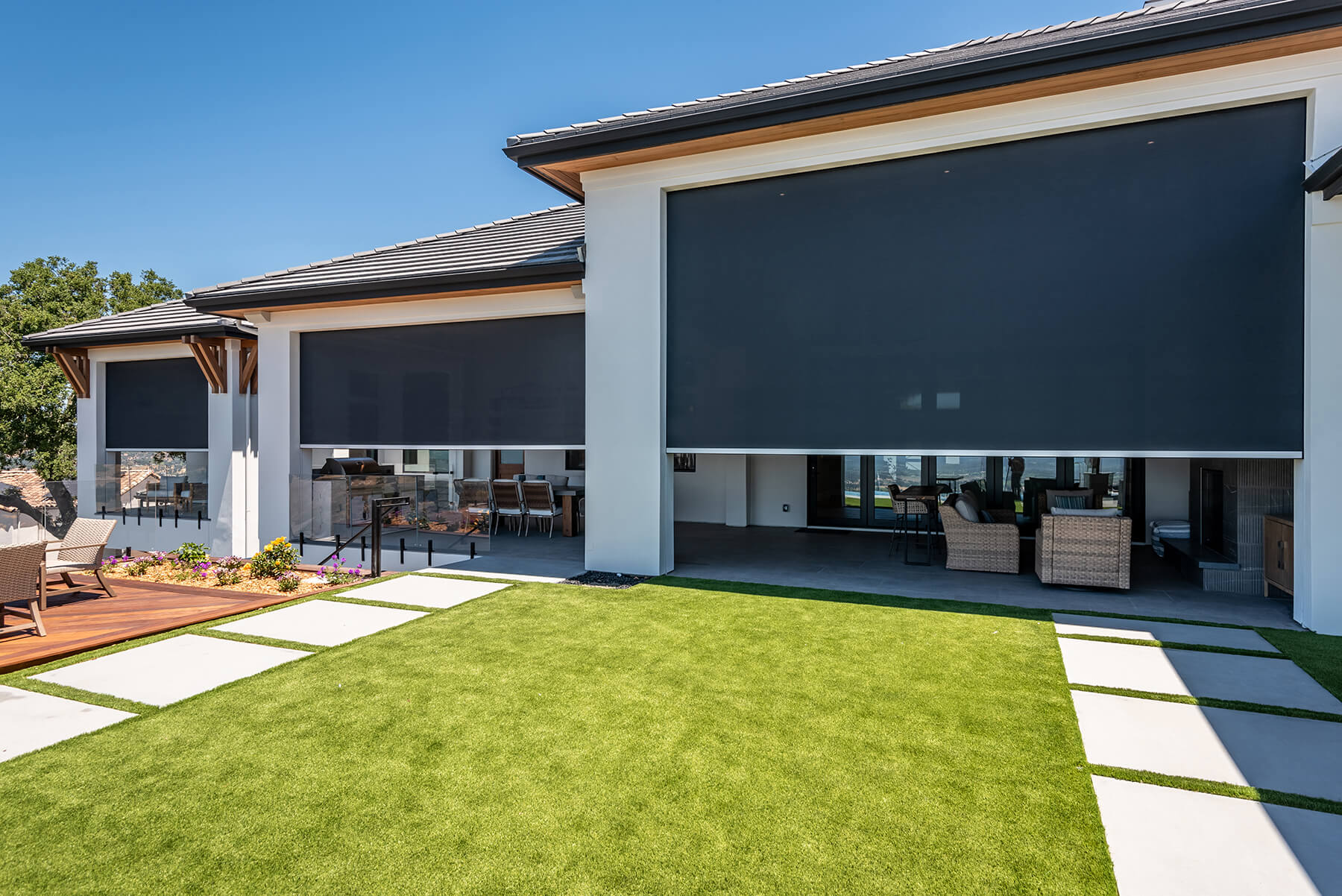
They can be used on windows, patios, porches, sliding glass doors, outdoor living spaces, and other areas exposed to direct sun. Some exterior solar screens are fixed in place, while others are retractable or motorized, allowing homeowners to lower them when sun protection is needed and raise them when they want the opening fully clear.
Exterior solar screens are different from regular insect screens. While insect screens are mainly designed to keep bugs out, solar screens are designed to reduce sunlight, glare, UV exposure, and solar heat gain. The Department of Energy explains that solar screens look similar to regular insect screens, but provide greater efficiency benefits.
How Exterior Solar Screens Create Daytime Privacy
Exterior solar screens create privacy by reducing visibility through the window from the outside during the day. This works because daytime outdoor light is usually brighter than indoor light. When the screen fabric is lowered over the window, the woven material makes it more difficult for people outside to see clearly into the home.
At the same time, the person inside can often still see outside. This makes exterior solar screens especially useful for rooms facing sidewalks, neighboring homes, driveways, streets, patios, and outdoor gathering areas.
For Santa Rosa homeowners, this can be helpful in spaces such as:
- Living rooms with large front-facing windows
- Home offices facing the street
- Kitchens near neighboring properties
- Sliding glass doors facing patios or decks
- Bedrooms that need daytime privacy
- Sunrooms and outdoor living spaces
Exterior solar screens do not provide the same privacy as blackout shades, shutters, or fully closed drapes. Instead, they create a softer level of privacy while keeping the home bright and open.
Why Exterior Solar Screens Preserve Views
One of the biggest advantages of exterior solar screens is that they allow homeowners to keep a view outside while reducing glare and visibility from the outside. The screen fabric is woven with small openings that allow some light and visibility to pass through.
This means you do not have to choose between privacy and your view. In many cases, you can lower the screen during the day and still see your yard, trees, garden, patio, pool area, or surrounding landscape.
This is especially valuable in Sonoma County homes where outdoor views are part of the home’s appeal. Many homeowners want to reduce harsh sunlight without completely covering up their windows or making the room feel closed in.
Exterior Solar Screens Help Block Sun Before It Hits the Glass
A major benefit of exterior solar screens is their placement. Because they are installed outside, they intercept sunlight before it reaches the window glass. This can make a noticeable difference in comfort.
Once sunlight passes through glass, much of that heat has already entered the home. Interior shades can still help with glare and brightness, but exterior screens are better positioned to reduce solar heat before it becomes an indoor comfort issue.
The Pacific Northwest National Laboratory identifies exterior roller shades, shutters, solar screens, and awnings as exterior window attachments that can support solar control and energy efficiency. PNNL also notes that window attachments can reduce UV exposure, improve comfort, reduce glare, and reduce cooling energy use.
For Santa Rosa homes with strong afternoon sun, exterior solar screens can be especially helpful on west-facing and south-facing windows.
Understanding Openness Factor
The openness factor is one of the most important features to consider when choosing exterior solar screens. It refers to how tightly the screen fabric is woven.
A lower openness factor means the fabric has a tighter weave. This generally provides more privacy, more glare control, and more solar heat reduction, but slightly less outward visibility.
A higher openness factor means the fabric has a more open weave. This usually provides a clearer view and more daylight, but less privacy and less sun control.
Common openness levels may include:
- 1% openness for stronger privacy, glare control, and sun protection
- 3% openness for a balanced mix of privacy, view-through, and heat control
- 5% openness for better visibility with moderate sun protection
- 10% openness for wider views and more light, with less privacy and heat control
The Department of Energy notes that solar screen openness affects efficiency benefits, with greater openness increasing visibility and light transmission while reducing protection against glare and solar heat gain.
How Fabric Color Affects Privacy and View
Fabric color can also affect how exterior solar screens perform. Darker screen fabrics often provide a clearer outward view because they reduce visual reflection and make it easier for the eye to see through the material. Lighter screen fabrics may reflect more sunlight and can appear brighter from the outside, which may support heat control and curb appeal depending on the setting.
The best choice depends on the home’s exterior, the amount of sun exposure, privacy goals, and how important view-through is for each room. For example, a street-facing front window may benefit from a tighter weave and a fabric color that improves daytime privacy. A backyard-facing patio may work better with a screen that preserves more of the outdoor view.
Hartley Window Coverings can help homeowners compare fabric samples in real lighting conditions so the final selection fits both the look of the home and the way the space is used.
Do Exterior Solar Screens Provide Privacy at Night?
Exterior solar screens are primarily a daytime privacy solution. At night, the privacy effect can change because the brighter side becomes the inside of the home. When indoor lights are on, and it is dark outside, people outside may be able to see in more easily.
This does not mean exterior solar screens are not useful. It simply means they should not be the only privacy treatment for bedrooms, bathrooms, or rooms that require privacy after dark.
For nighttime privacy, homeowners may want to pair exterior solar screens with interior treatments such as:
- Cellular shades
- Roller shades
- Roman shades
- Drapes or side panels
- Shutters
- Room-darkening shades
This gives you the best of both worlds: exterior sun control during the day and stronger privacy when the lights are on at night.
How Exterior Solar Screens Reduce Glare
Glare can make a room uncomfortable, especially when sunlight reflects off floors, countertops, TVs, or computer screens. Exterior solar screens help reduce glare before the light fully enters the space.
This is useful for:
- Home offices
- Living rooms
- Dining rooms
- Media rooms
- Kitchens
- Patio doors
- Outdoor seating areas
For homes in Santa Rosa and Sonoma County, glare control can make sunny rooms more comfortable during bright afternoons without forcing homeowners to close everything off.
How Exterior Solar Screens Help Protect Interiors
Direct sunlight can fade furniture, hardwood flooring, rugs, artwork, upholstery, and other interior finishes over time. Exterior solar screens reduce the amount of direct sun and UV exposure that reaches the window area.
PNNL notes that window attachments can reduce UV exposure to interior and exterior surfaces, which can slow fading and deterioration of fabrics, furniture, wood flooring, decking, trim, siding, plastics, and painted surfaces.
This makes exterior solar screens a strong option for rooms with valuable furnishings or flooring, especially when the windows receive several hours of direct sunlight each day.
How Exterior Solar Screens Can Support Energy Efficiency
Exterior solar screens are often chosen for comfort, but they can also support energy efficiency by reducing solar heat gain. When less heat enters through sunny windows, the air conditioning system may not have to work as hard to keep the home comfortable.
The Department of Energy notes that solar screens can reduce solar heat gain, UV damage, and glare. PNNL also reports that DOE field studies have shown whole-home summertime cooling savings ranging from 15% to 25% from optimized use of high-efficiency shades, including interior and exterior products.
Actual savings depend on the home, window orientation, screen fabric, climate, HVAC system, shade operation, and how much direct sun hits the windows. Still, for Santa Rosa homes with bright afternoon exposure, exterior solar screens can be a helpful part of a broader comfort and efficiency strategy.
Why Exterior Solar Screens Work Well in Santa Rosa and Sonoma County
Santa Rosa and the surrounding Sonoma County area experience plenty of sunny days, and many homes are designed around indoor-outdoor living. Large windows, patios, decks, and sliding glass doors can make a home feel open and connected to the landscape, but they can also bring heat, glare, and privacy concerns.
Exterior solar screens work well for this type of home because they reduce sun exposure without making the space feel dark or sealed off. They are especially useful for:
- West-facing windows that receive strong afternoon sun
- South-facing windows with extended daylight exposure
- Patio doors and outdoor living areas
- Rooms that face streets or neighboring homes
- Homes with scenic yards or garden views
- Spaces where homeowners want shade without losing visibility
Hartley Window Coverings is located in Santa Rosa and serves Sonoma County and nearby communities. The sitemap includes exterior solar screen shades as a dedicated exterior product category, along with motorized sun control and other exterior window covering options.
Fixed vs. Retractable Exterior Solar Screens
Exterior solar screens may be available in fixed or retractable styles depending on the application.
Fixed exterior solar screens stay in place over the window. They can be a good fit for windows that receive consistent sun exposure or where homeowners want ongoing privacy and sun control.
Retractable exterior solar screens can be raised and lowered as needed. These are often used for patios, porches, outdoor rooms, large openings, and windows where homeowners want more control throughout the day.
Motorized exterior solar screens add even more convenience. With motorization, screens can be adjusted by remote, wall switch, app, or schedule, depending on the system. This is especially helpful for large screens, hard-to-reach areas, or outdoor living spaces that are used at different times of day.
Exterior Solar Screens vs. Interior Solar Shades
Exterior solar screens and interior solar shades can both reduce glare and improve daytime privacy, but they work differently.
Exterior solar screens are installed outside and help block sunlight before it reaches the glass. This makes them especially useful for heat control and outdoor living comfort.
Interior solar shades are installed inside and are often chosen for decorative window treatment design, glare control, and a finished interior look.
For homeowners who want stronger heat reduction, exterior solar screens are often the better choice. For homeowners who prefer a more decorative indoor window treatment, interior solar shades may be more appropriate. Some homes benefit from both, especially on large window walls or high-sun exposures.
Best Places to Use Exterior Solar Screens
Exterior solar screens can be used in many areas around the home, but they are especially helpful where sun, glare, privacy, and outdoor comfort overlap.
Patio and Porch Openings
Exterior solar screens can help turn patios and porches into more comfortable outdoor living areas by reducing glare and direct sun exposure.
Sliding Glass Doors
Large glass doors can bring in a lot of light and heat. Exterior screens help control sunlight before it reaches the glass while still allowing views outside.
West-Facing Windows
West-facing windows often receive the harshest afternoon sun. Exterior solar screens can help reduce heat buildup and glare during the hottest part of the day.
Home Offices
For people working from home, exterior screens can reduce glare on computer monitors while maintaining daylight and outdoor visibility.
Living Rooms and Family Rooms
Exterior solar screens help make sunny gathering spaces more comfortable without covering the view completely.
When Exterior Solar Screens May Not Be the Best Standalone Solution
Exterior solar screens are very useful, but they are not the right single solution for every window or room. You may need another window treatment if the goal is complete blackout, full nighttime privacy, or a soft, decorative interior look.
They may need to be paired with another product when:
- The room needs privacy after dark
- The room is a bedroom or bathroom
- You want a full blackout effect
- You want added insulation during colder weather
- You want a decorative fabric finish inside the room
In these situations, Hartley Window Coverings can help pair exterior solar screens with interior shades, shutters, or drapery for a complete window covering plan.
Schedule an Exterior Solar Screen Consultation in Santa Rosa
Exterior solar screens are a strong choice for homeowners who want daytime privacy, outdoor views, reduced glare, UV protection, and better comfort in sunny spaces. They are especially useful for Santa Rosa and Sonoma County homes with large windows, patio doors, outdoor living areas, and rooms that receive strong afternoon sun.
Hartley Window Coverings can help you choose the right exterior solar screen fabric, openness factor, color, operating system, and installation style for your home. Whether you want to shade a patio, protect a sunny living room, improve daytime privacy, or make outdoor spaces more usable, our team can guide you through your options.
Contact Hartley Window Coverings today to schedule an in-home consultation for custom exterior solar screens in Santa Rosa, Sonoma County, Marin County, Napa County, and nearby communities.
FAQs About Exterior Solar Screens and Daytime Privacy
Do exterior solar screens provide privacy during the day?
Yes. Exterior solar screens can improve daytime privacy by making it harder for people outside to see clearly into your home. This works best when it is brighter outside than inside.
Can you see out through exterior solar screens?
Yes. Exterior solar screens are designed to reduce sunlight and glare while still allowing outward visibility. The clarity of the view depends on the screen fabric, color, and openness factor.
Do exterior solar screens provide privacy at night?
Not fully. At night, when lights are on inside, visibility can reverse. If nighttime privacy is important, exterior solar screens should be paired with interior shades, shutters, or drapes.
Do exterior solar screens block heat?
Yes. Exterior solar screens help reduce solar heat gain by filtering sunlight before it reaches the window glass. This can make sunny rooms and outdoor living areas more comfortable.
Are exterior solar screens better than interior solar shades?
Exterior solar screens are often better for heat control because they stop sunlight before it reaches the glass. Interior solar shades are often better when the main priority is an indoor decorative window treatment.
What openness factor is best for exterior solar screens?
A lower openness factor, such as 1% or 3%, typically provides more privacy, glare control, and sun protection. A higher openness factor, such as 5% or 10%, usually provides a clearer view and more daylight.
Are exterior solar screens good for patios?
Yes. Exterior solar screens are a great option for patios, porches, decks, and outdoor living areas because they reduce sun exposure and glare while keeping the area open and usable.
Are exterior solar screens good for Santa Rosa homes?
Yes. Exterior solar screens are well-suited for Santa Rosa homes because they help manage bright sun, heat, glare, daytime privacy, and outdoor comfort while preserving views.


.webp)