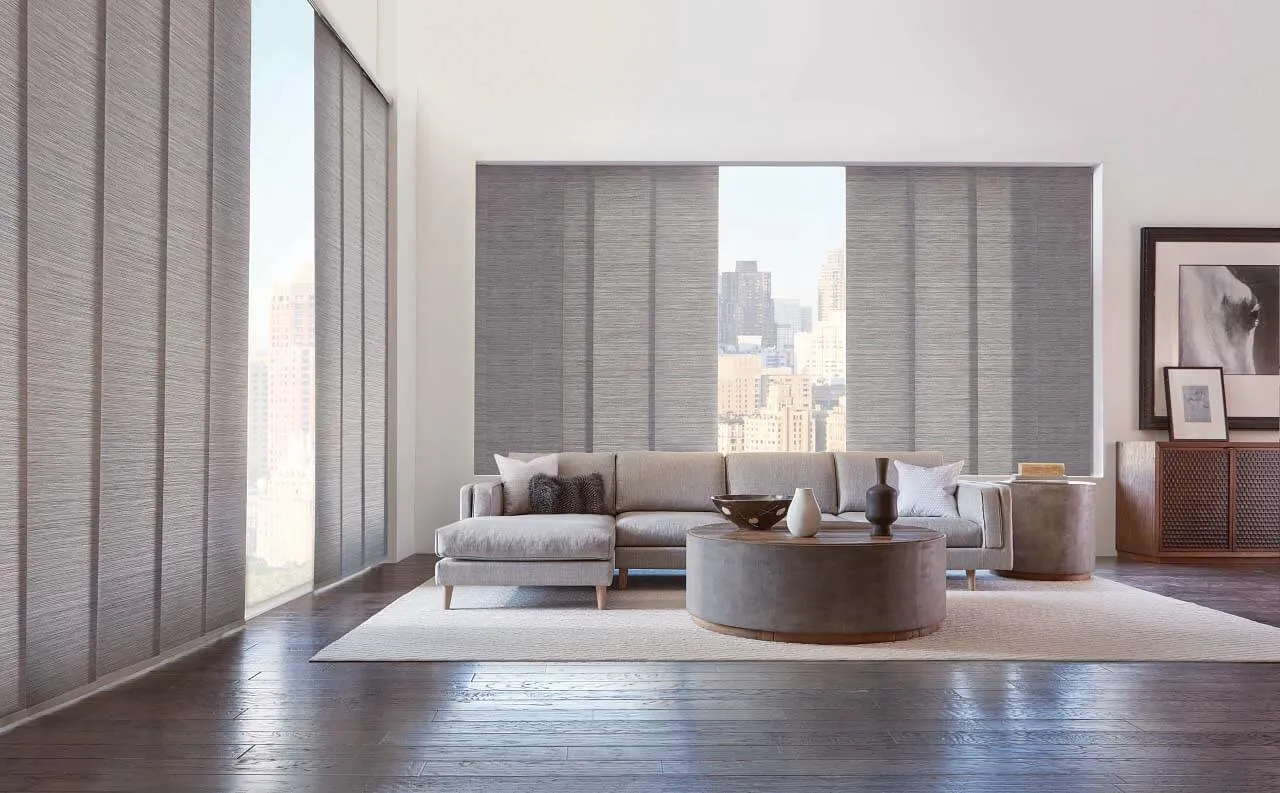
The fabric or material used in a window shade determines how it performs, how it looks, and how long it lasts. With so many options available, understanding the differences between shade materials can help you choose the right product for each room in your home.
Solar Screen Fabrics
Solar screen fabrics are woven from coated yarns designed to block solar energy while maintaining outward visibility. The openness factor of the weave determines how much light passes through, ranging from very open weaves that allow more visibility to tighter weaves that provide stronger glare reduction and privacy.
Solar screen fabrics are durable, fade-resistant, and easy to clean, making them a popular choice for living rooms, home offices, and any space where glare control and view preservation are both priorities.
Light-Filtering Fabrics
Light-filtering fabrics allow diffused natural light to pass through while obscuring direct views into the space. They create a soft, ambient glow that brightens a room without harsh glare. Light-filtering fabrics are available in a wide range of colors and textures and work well in living rooms, kitchens, and dining areas where a balance of light and privacy is desired.
Room-Darkening Fabrics
Room-darkening fabrics are tightly woven or coated to block a significant portion of incoming light. They provide strong privacy and are ideal for bedrooms, media rooms, and any space where light reduction is a priority. Room-darkening fabrics do not block all light completely but significantly reduce brightness.
Blackout Fabrics
Blackout fabrics are engineered to block virtually all incoming light. They are the best choice for bedrooms where complete darkness is desired for sleeping, as well as home theaters and nurseries. Blackout fabrics are typically heavier than other shade materials and may be laminated or lined to achieve maximum light blockage.
Natural Woven Materials
Woven wood shades use natural materials such as bamboo, reeds, grasses, and jute to create a warm, organic aesthetic. These materials filter light naturally, creating a soft dappled effect rather than blocking it completely. Optional liners can be added to improve privacy and light control. Natural materials add texture and warmth to a room and work particularly well in casual or nature-inspired interiors.
Cellular Honeycomb Fabrics
Cellular shades are constructed from non-woven polyester fabric formed into honeycomb-shaped cells. The cells trap air within the shade, creating an insulating barrier that improves energy efficiency. Cellular fabrics are available in light-filtering and room-darkening options and in single, double, and triple cell configurations that offer increasing levels of insulation.
Fabric Weight and Texture
Beyond opacity, fabric weight and texture affect how a shade hangs, how it rolls or folds, and how it interacts with light. Heavier fabrics tend to hang more crisply and provide better structure, while lighter fabrics may be more translucent and have a softer appearance. Textured fabrics add visual interest and can complement a room's overall design palette.
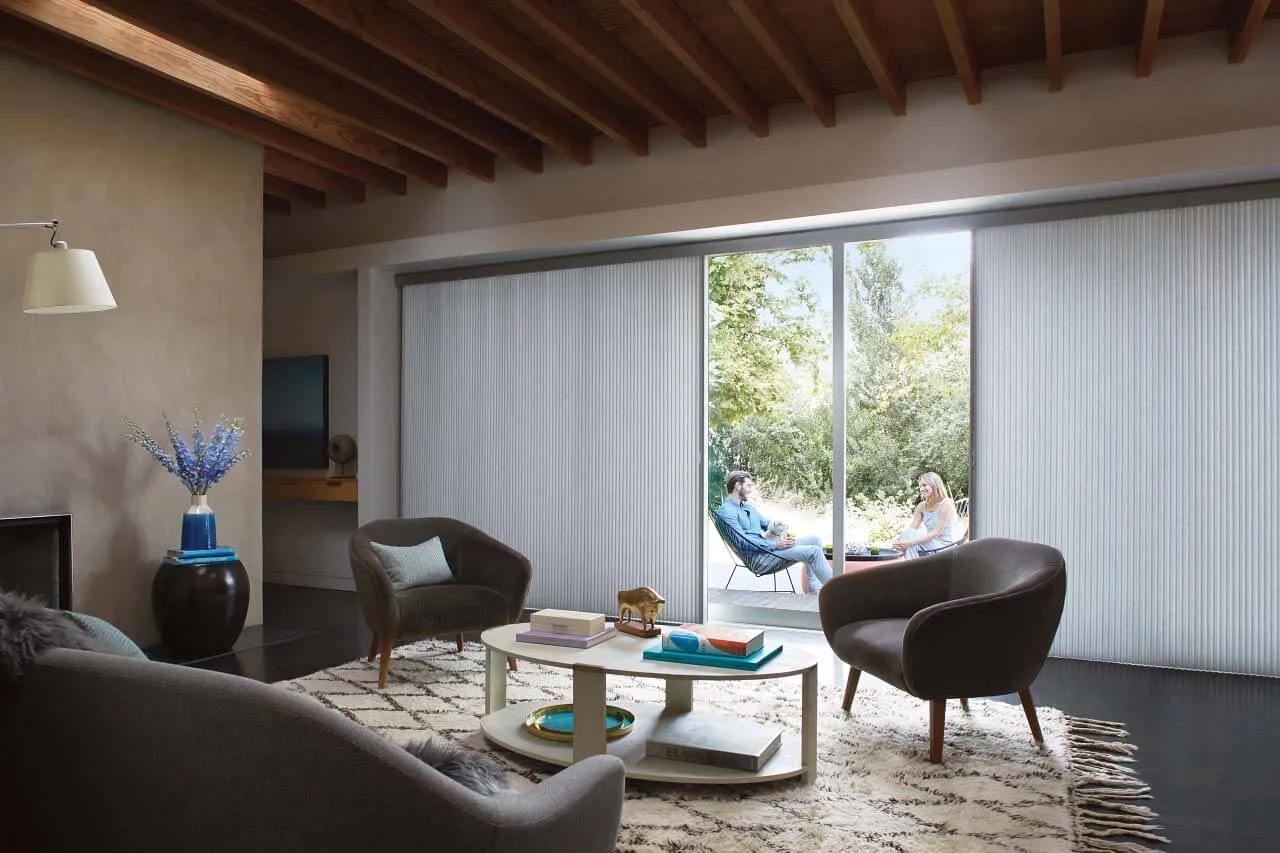
Find the Right Fabric for Every Window
Choosing the right shade fabric for each room ensures you get the light control, privacy, and aesthetic you want. Hartley Window Coverings offers a wide selection of fabrics and materials across all shade styles. Contact us today to schedule your in-home consultation and explore your options in person.


.webp)