Key Takeaways
- Material quality and UV exposure are two of the biggest durability factors.
- Exterior solar screens generally experience more weather exposure than interior solar shades.
- Frames and hardware may last longer than the solar screen material.
- Gentle, regular cleaning can prevent dust and pollutants from accumulating.
- Small tears, loose edges, and damaged hardware should be addressed promptly.
- Proper installation helps prevent uneven tension, rubbing, and premature wear.
- Replacement should be based on condition and performance—not age alone.
What Are Solar Screens?
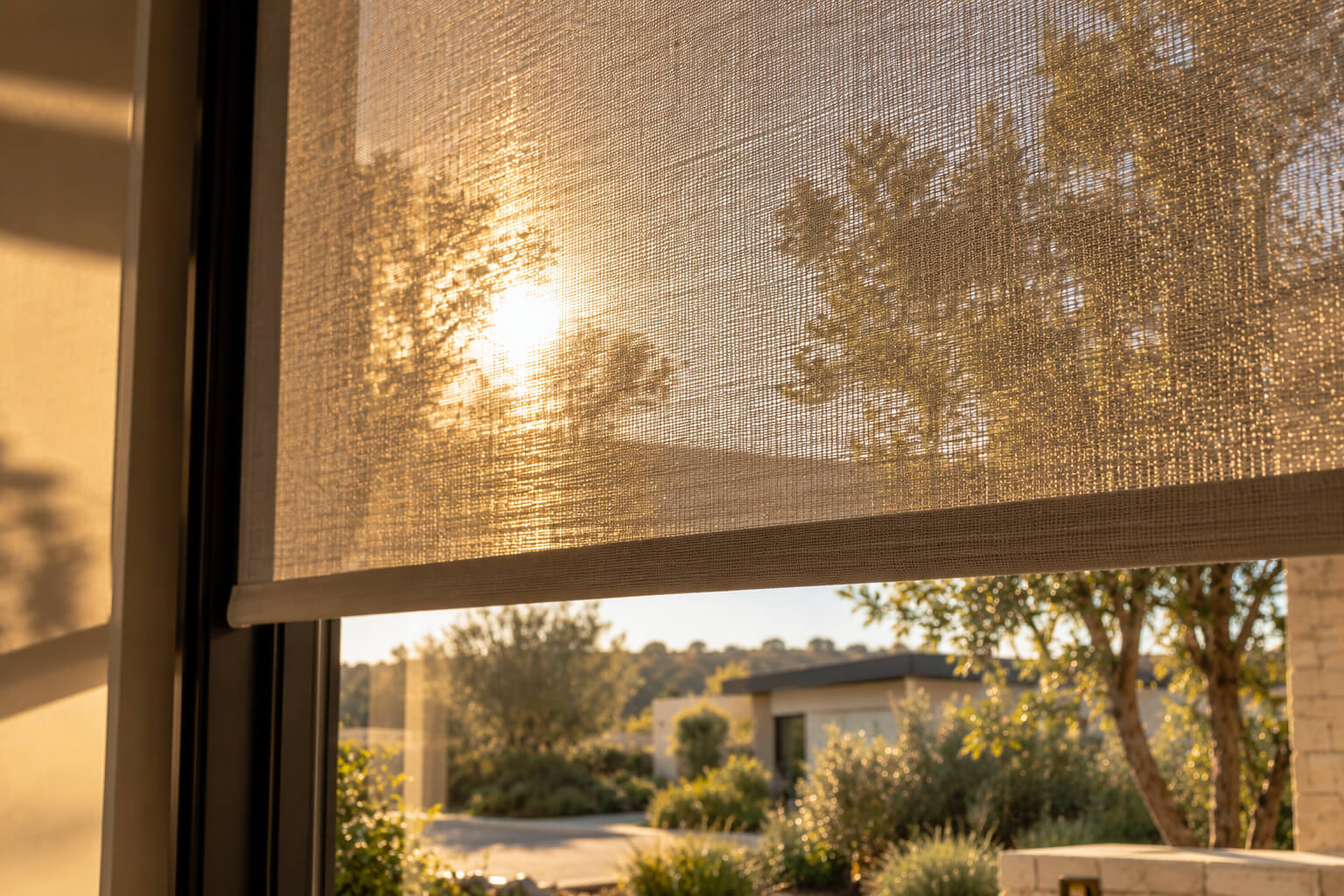
Solar screens are window coverings designed to limit solar heat gain, glare, and UV exposure, with benefits that include energy savings, added outdoor comfort, and protection from sun damage before or as sunlight reaches a window; depending on the fabric, they commonly block about 40% to 95% of UV rays. The screen fabric contains a woven mesh that filters sunlight while preserving varying levels of outward visibility.
Exterior solar screens are installed outside the window, where they can intercept the sun’s heat before it reaches the glass. This positioning can make them especially useful for west-facing windows and other areas where strong afternoon sunlight creates unwanted heat and glare.
Interior solar shades use similar screen fabric but operate inside the home. They provide convenient light control and help manage glare while maintaining a streamlined appearance. Hartley Window Coverings offers both exterior solar screen shades and custom interior roller and solar screen shades, allowing the solution to be matched to the window and space.
Solar screens should not be confused with an ordinary insect window screen. Standard screens are primarily designed to keep insects outside while allowing ventilation. Solar screen material has a tighter weave specifically intended to reduce the amount of sunlight and heat radiation entering through a window.
Factors That Determine How Long Solar Screens Last
There is no universal replacement date for every solar screen. Several factors determine whether a product remains effective for a few years, a decade, or longer.
Quality of the Solar Screen Material
The durability of the mesh begins with the quality of its fibers, construction, and protective finish. A high-quality, fade-resistant screen fabric is generally better equipped to withstand repeated exposure to sunlight than a lower-cost material that was not designed for long-term exterior use.
Solar screen fabrics differ in weave, weight, composition, color, and openness. Some are intended primarily for interior roller shades, while others are engineered to stand up to outdoor conditions. Using the right material for the installation is essential. An interior fabric should not be assumed to offer the durability required for an exposed exterior application.
Manufacturer specifications and warranties can help when comparing products, but they should be reviewed for the exact fabric and application. Coverage can vary depending on the manufacturer, product line, installation, and type of damage.
Sun and UV Exposure
Constant exposure to the sun’s heat and harmful UV rays can gradually affect solar screen material. Over time, the fabric may fade, lose flexibility, or become brittle, especially with prolonged exposure to uv radiation. These changes tend to occur sooner on windows that receive intense direct sunlight throughout much of the day.
South- and west-facing windows often experience the most demanding conditions. On the west side of a house, the strongest afternoon exposure occurs when summer heat hits the windows, when outdoor temperatures may already be high. In a hot and sunny climate, this repeated exposure can place additional stress on the screen fabric.
Fading does not always mean the screen has stopped providing sun protection. However, noticeable color changes should prompt a closer inspection for brittleness, thinning, or uneven areas.
Weather and Environmental Conditions
Exterior solar screens must stand up to more than sunlight. Wind, rain, airborne dust, plant debris, salt, and other pollutants can affect the fabric, frame, and hardware.
Wind can cause loose material to move repeatedly against the frame or nearby surfaces. Debris may scratch or stretch the mesh, while dirt can collect within the tighter weave. In coastal locations, salty air may accelerate corrosion of certain metal frames, fasteners, and operating components if the materials are not suited to those conditions.
Trees and landscaping can also contribute to wear. Branches may rub against the screen, and falling debris can create small tears that grow over time. Pets can damage screen material by scratching, climbing, or pushing against it.
Installation Quality
Even durable solar screen material may wear prematurely if it is not properly installed. Proper exterior setups should also maintain an air gap between the solar screen and the glass. The fabric should have appropriate, even tension without being overstretched. Frames, guides, fasteners, and moving components should align correctly so the material does not rub or bind during operation.
The installation must also account for the window size, mounting surface, and exposure. Large windows and exterior applications may require different support than smaller openings. A custom, fully assembled system can help ensure that the fabric, frame, and operating method work together as intended when installing solar screens, supporting long-term durability and the added benefits of correct fit and mounting.
Hartley Window Coverings provides professional guidance and installation for custom interior and exterior products. This allows each solution to be measured and selected for the specific opening instead of relying on a generic size or installation approach.
Cleaning and Maintenance
Solar screens do not require complicated maintenance, but regular cleaning can support their appearance and longevity. Dust, pollen, salt, and pollutants left on the mesh may contribute to gradual material breakdown.
Cleaning requirements depend on the manufacturer and product, so homeowners should follow the care instructions supplied with their solar screens. In most cases, loose dust can be removed gently without harsh scrubbing. Where permitted, mild soap, clean water, and a soft cloth or brush may be appropriate.
High pressure, abrasive tools, strong chemicals, and aggressive rubbing may damage the mesh or its finish. If a screen is motorized or contains specialized hardware, avoid spraying water into its operating components.
How Do Solar Screens Work?
Solar screens work by absorbing and reflecting a portion of the sun’s energy. By limiting the sun's heat and reducing how much light and sunlight entering the room reaches the glass, they can reduce glare and solar heat gain while helping protect furniture, flooring, and other interior finishes from UV-related fading.
The exact performance depends on the solar screen material, color, openness, position, and installation. A tighter weave generally blocks more sunlight and is less likely to leave a noticeable dark effect indoors, but it may reduce the outdoor view. A more open mesh allows more natural light and clearer outward visibility but provides less shielding.
Darker colors often produce a clearer view through the fabric, while lighter colors may reflect more visible sunlight. There is no single best color or openness for every house. Hartley’s guide to choosing the best color for a solar screen explains how appearance, heat control, and visibility influence that choice.
The U.S. Department of Energy also notes that appropriate energy-efficient window coverings can help manage solar heat gain when they are selected and operated correctly. Actual changes in indoor temperature, air-conditioning demand, utility bills, and electricity bills will vary by home, climate, window type, shade selection, and occupant behavior.
Signs That Solar Screens Need Replacement
Age alone does not determine when a screen should be replaced. A 10-year-old solar screen in good shape may continue working, while a newer screen with physical damage may require attention.
Look for the following signs:
- Brittle, cracked, or stiff screen material
- Small tears, holes, or frayed edges
- Mesh pulling away from the frame
- Sagging, stretching, or uneven tension
- Significant fading or discoloration
- Bent or damaged frames
- Corroded fasteners or hardware
- Difficulty raising or lowering an operating screen
- Increased heat or glare near the window
- Uneven coverage that allows concentrated sunlight through
A small problem does not always mean the complete system must be replaced. Depending on its design and condition, it may be possible to repair hardware, replace screen fabric, or reuse a sound frame. A professional inspection can determine which approach is appropriate.
Solar Screens Versus Window Tint
Solar screens and window tint both address sunlight, but they work differently. Window tint is applied directly to the glass and does not prevent heat from reaching the glass after sunlight has already struck it, while an exterior solar screen can help prevent heat by intercepting part of the sun’s energy before it reaches the window.
Because exterior screens stand between the sun and glass, they can be a practical option for windows with high solar exposure. Window film may still be suitable in some situations, but compatibility should be verified for the particular glass. Neither option delivers identical performance in every home.
Interior solar shades provide another approach. They are protected from direct exposure to rain and wind and can be raised when an unobstructed view is desired. Exterior screens receive greater environmental exposure but can stop part of the sun’s heat before it reaches the glass, helping limit heat buildup more effectively than interior-applied tint in that respect.
The right solution depends on the window, orientation, desired light level, outward visibility, exterior appearance, and operating preferences.
Are Solar Screens Cost-Effective?
Solar screens cost different amounts depending on their size, screen fabric, frame, operating system, installation requirements, and degree of customization. Total cost still varies with customization and assembly, so a meaningful estimate cannot be based on a generic square-foot or square-inch price alone.
A low initial price may not provide the best long-term value if the screen material fades, tears, or loses tension after only a few years. A well-selected product that continues controlling heat and glare for many years may prove more cost-effective across its service life, which is one of the practical benefits for buyers comparing options.
The potential effect on energy costs also varies. In some homes, solar screens can save money by reducing summer heat gain and lowering air-conditioning demand, but they do not eliminate the need for air conditioning and should not be expected to reduce utility bills by a guaranteed percentage. Insulation, air leakage, window condition, climate, thermostat settings, and household routines all contribute to energy consumption.
How to Help Solar Screens Last Longer
Homeowners can support screen durability with a few simple habits:
- Follow the manufacturer’s cleaning and care instructions.
- Remove loose dust and debris periodically.
- Avoid abrasive brushes, harsh chemicals, and high-pressure washing.
- Keep branches and landscaping from rubbing against exterior screens.
- Inspect the mesh, edges, frame, and hardware for damage.
- Address small tears and loose components before they worsen.
- Operate movable screens carefully and avoid forcing a stuck mechanism.
- Have motorized products checked if they begin moving unevenly.
- Use products rated for their intended interior or exterior location.
- Arrange professional service when the screen is no longer operating correctly.
Frequently Asked Questions
Do solar screens fade?
Solar screens may fade after years of sunlight and weather exposure. Fading does not always mean that UV protection has disappeared, but the material should be inspected for brittleness, thinning, or reduced performance.
Can solar screen fabric be replaced without replacing the frame?
Sometimes. If the frame remains structurally sound and is compatible with replacement material, new mesh may be possible. The condition and design of the complete system must be evaluated first.
Do darker solar screens last longer?
Color alone does not determine lifespan. Durability depends more directly on material quality, UV resistance, exposure, installation, and maintenance. Darker colors may provide better outward visibility through some solar screen fabrics.
How often should solar screens be cleaned?
Cleaning frequency depends on the location and exposure. Screens near roads, trees, construction, or coastal air may collect debris more quickly. Inspect them periodically and clean them according to the manufacturer’s instructions.
Should solar screens be replaced after 10 years?
Not automatically. Ten years is a useful inspection point, not a mandatory replacement deadline. Screens that remain secure, flexible, undamaged, and effective may continue to provide useful service.
Get More Life From the Right Solar Screen
Solar screens often last around 10 to 15 years, but material quality, climate, installation, and care determine the actual result. Choosing an appropriate interior or exterior product—and having it professionally fitted—can improve both performance and durability.
Contact Hartley Window Coverings to schedule a consultation and explore custom solar screen solutions for your windows.


.webp)